
Reverse Engineering + Replacement Part
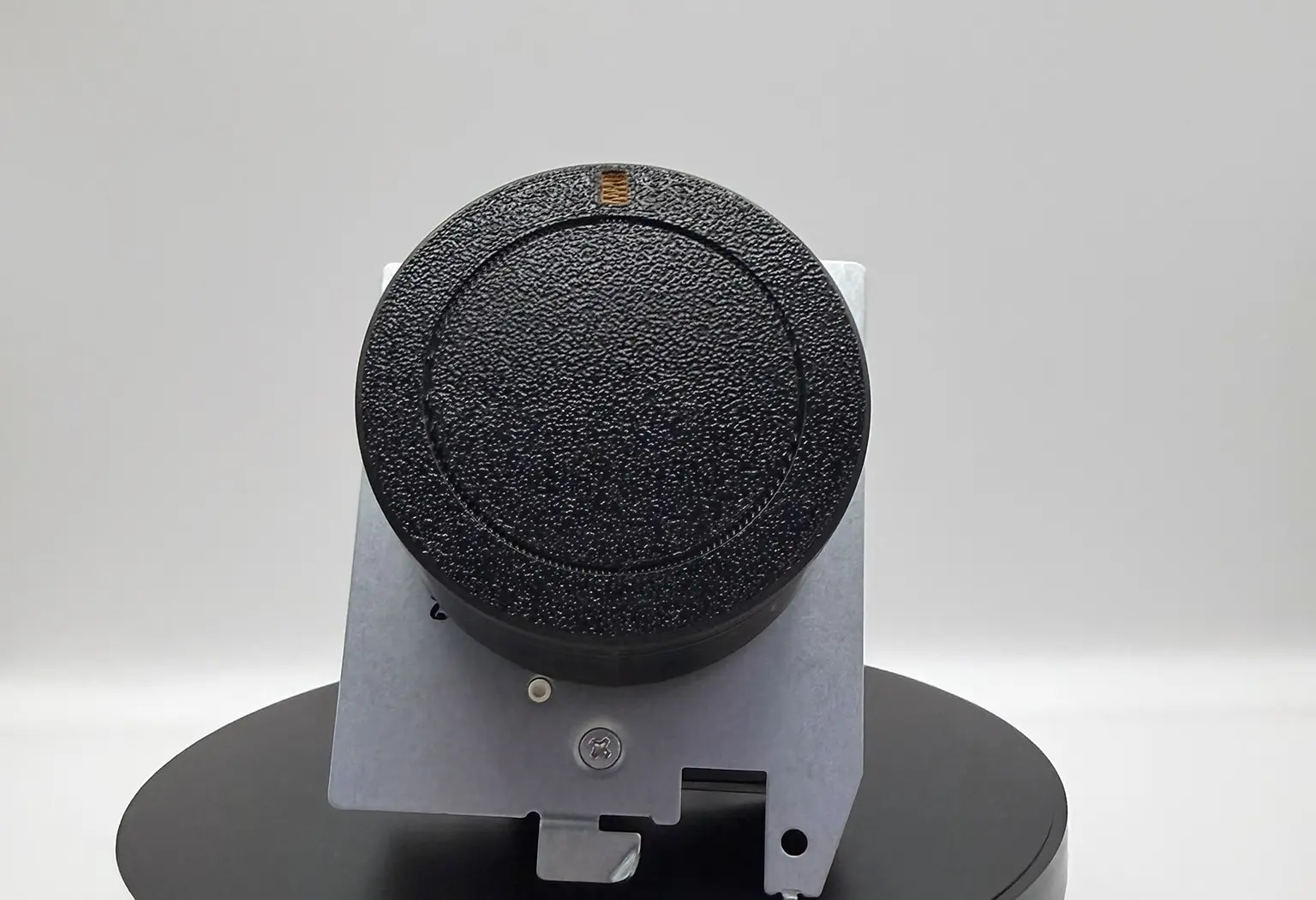
Reverse-Engineered Dryer Timer Control Knob
A PETG replacement-part study built around a real dryer timer shaft, printed D-bore fit coupons, controlled seating, localized retention, and physical validation on the reference mechanism.
The challenge
Recover the mating interface and functional behavior without copying irrelevant injection-molded geometry.
Small knobs, dials, and shaft adapters can crack, disappear, or become unavailable while the underlying equipment remains serviceable. The critical problem is the interface—not the plastic shell by itself.
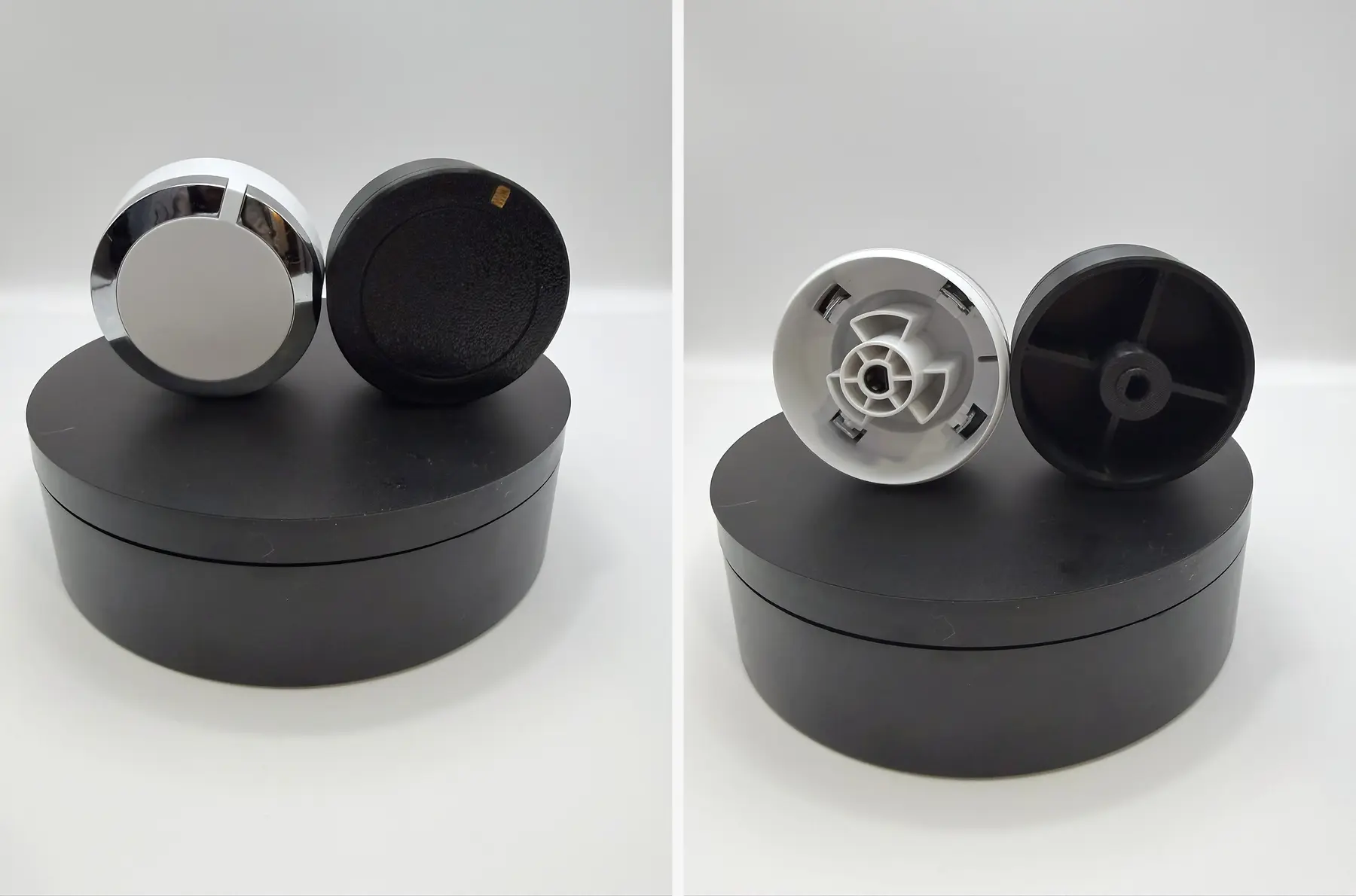
This build reconstructed the D-shaft fit, seating behavior, pointer clocking, retention, and hand removal around a physical timer mechanism, then redesigned the hidden structure for support-free FDM.
Controlled interfaces
Requirements locked around the real workflow.
Engineering approach
Treat the physical mating interface as the source of truth, then redesign the part for FDM.
Coupon-qualified bore
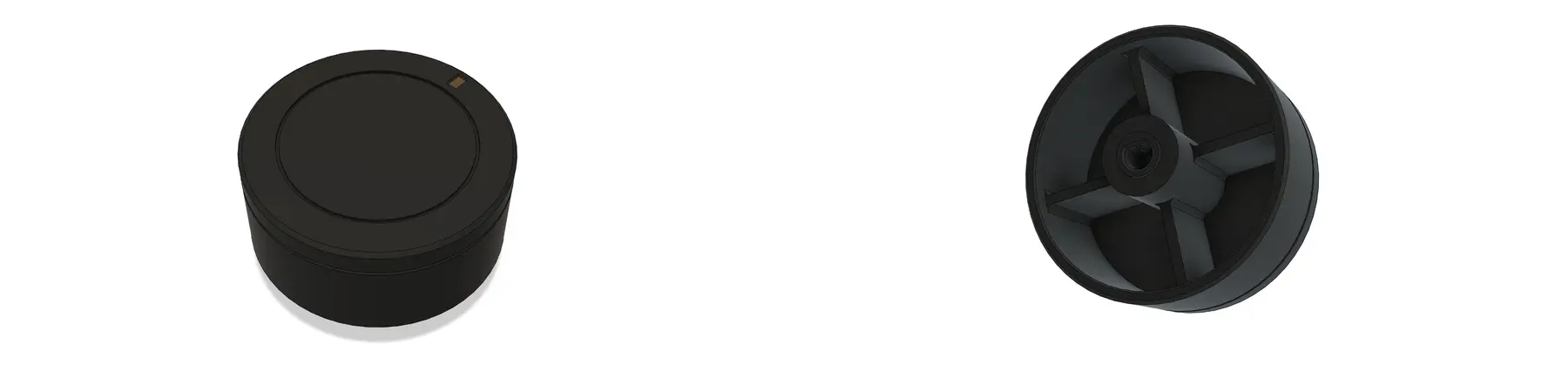
Two printed fit matrices narrowed the D-shaft interface until the D1 geometry was selected as the production bore.
FDM-specific structure
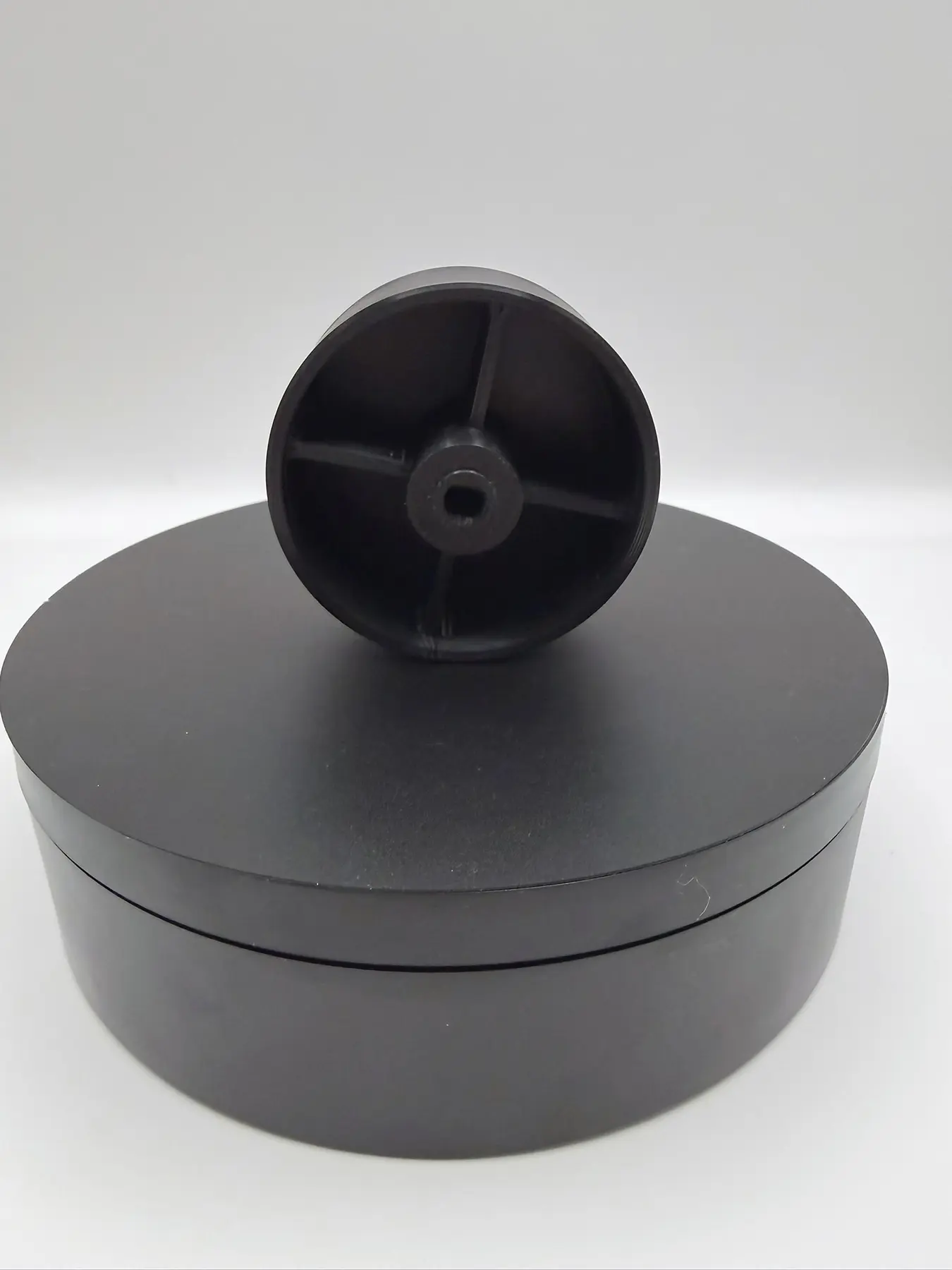
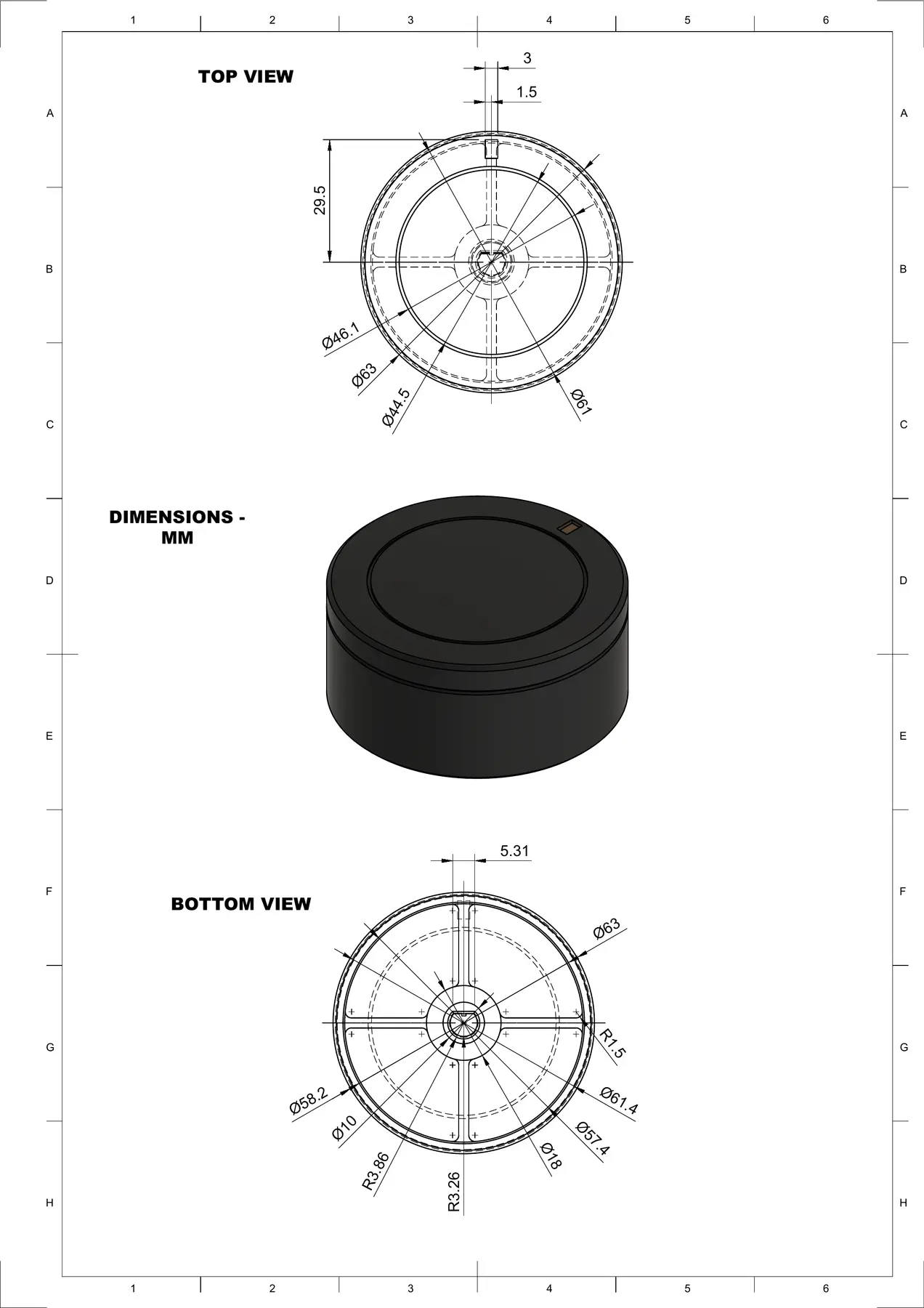
A central hub, four radial ribs, and hollow shell replaced the OEM clip windows and thin injection-molded webbing.
Controlled axial stack
Seating face, boss, bore, and shell position were revised together so the knob stopped on the intended collar without casing interference.
Localized retention
One controlled rib adds axial hold without shrinking the entire bore or creating unnecessarily high installation force.
Iteration + lessons learned
Fit was qualified in small steps before the full knob and retention condition were locked.
Rev A and Rev B D-bore coupons narrowed the fit range before full-size printing. The first complete knob proved the architecture and full rotation, then drove seating and retention refinement.
An earlier retention condition seated and rotated correctly but released too easily during a jerk test. The bore remained locked while only the flat-side rib was revised to the final 0.15 mm target interference.
A proposed skirt extension was rejected after physical clearance measurement. Additional geometry was not added merely to imitate the OEM underside when the validated FDM architecture already cleared the timer plate and casing.
Manufacturing record
Final sliced data—not superseded revisions.
- Printer / plate
- Bambu Lab X2D / Textured PEI
- Material
- Black PETG with acrylic pointer accent
- Layer / structure
- 0.16 mm; 3 walls; 15% gyroid
- Support / brim
- None / none
- Final knob
- 32.49 g on a 1h 58m validation plate
- Material cost
- $0.58 at the normalized $17.99/kg basis
A 3.09 g conditioning cylinder remained on the final plate to clear minor ooze before critical interface passes. It is process material, not part of the delivered knob.
Validation
The physical build passed its intended portfolio checks.
Seating / clearance
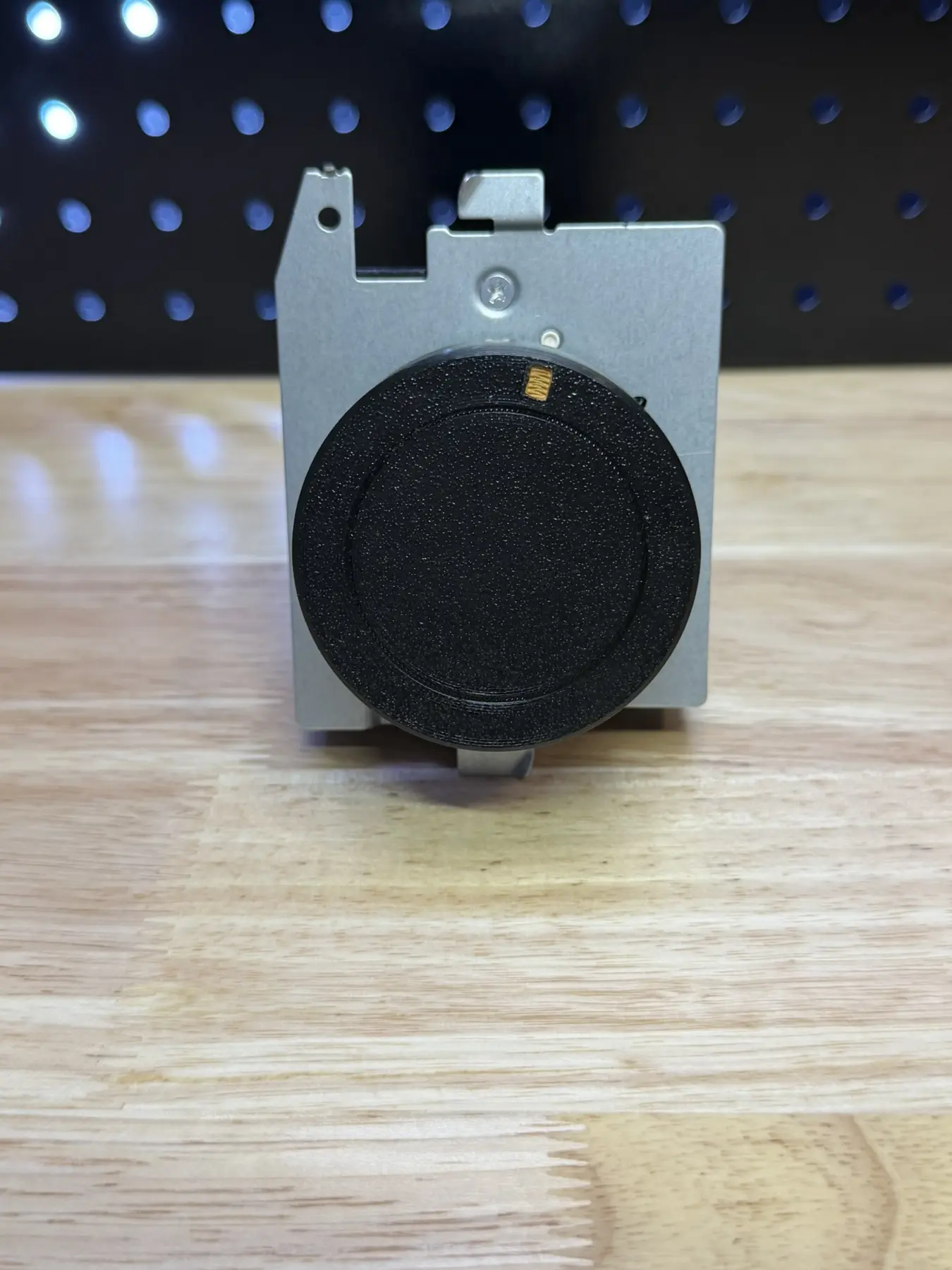
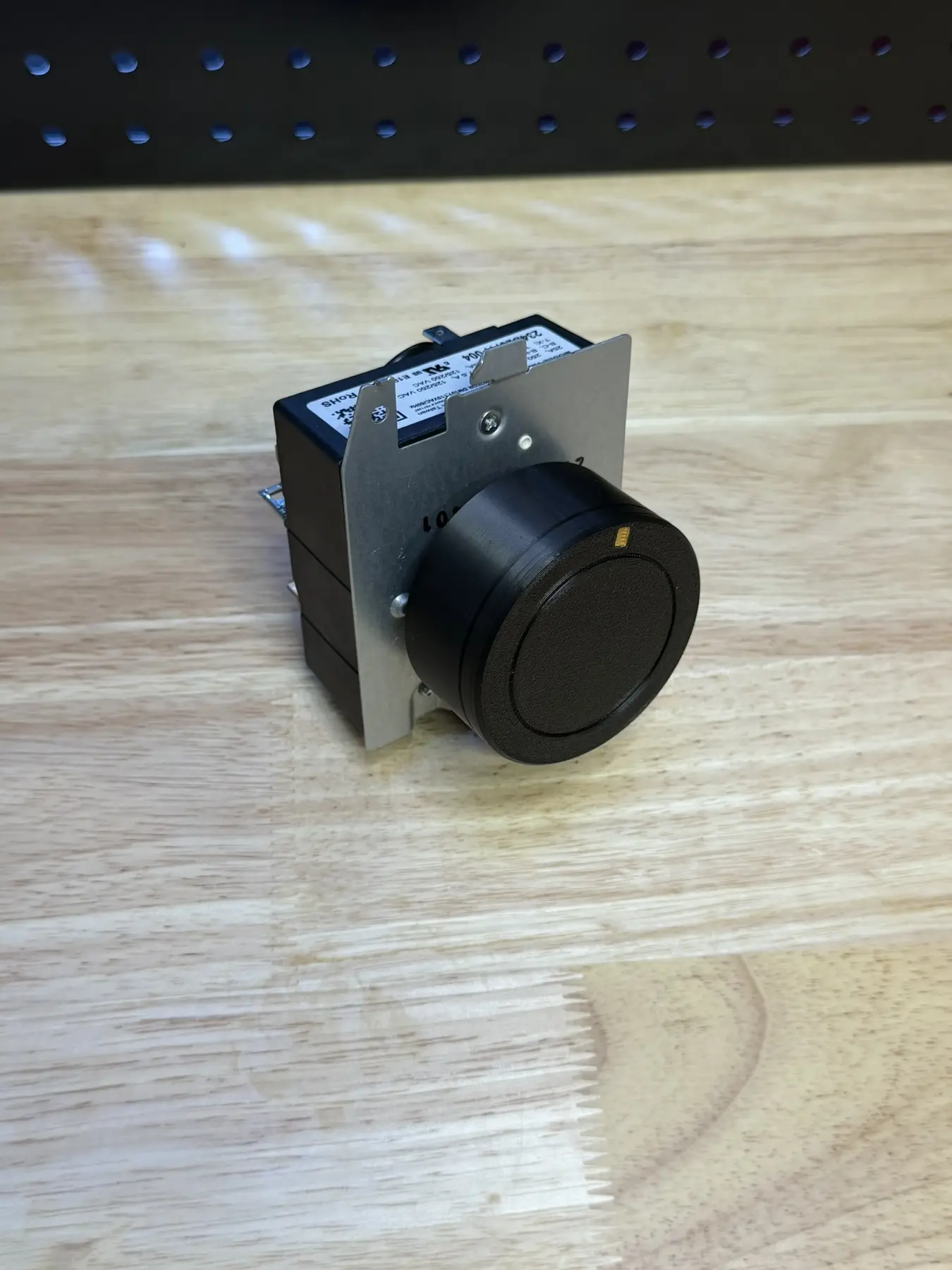
Knob seated on the intended collar with no observed casing interference.
Clocking / rotation
D-flat engaged and completed the available timer detents without slip.
Retention
Final localized rib remained installed through handling and jerk testing.
Removal / integrity
Removed by hand with moderate force and no cracking or bore failure.
Pointer
Recessed index remained readable after the bronze/gold accent fill.
Printability
Final PETG geometry completed support-free and brim-free.
Business value
What this build actually demonstrates.
The result is not only a printed object. It is evidence of a repeatable path from a practical problem through CAD, focused testing, revision, documented manufacturing, and a physically checked release.
- Physical-part reverse engineering
- Mating-interface measurement
- Coupon-driven fit qualification
- Parametric Fusion 360 modeling
- FDM-specific redesign
- Localized retention development
- Support-free PETG manufacturing
- Physical functional validation
Evidence gallery
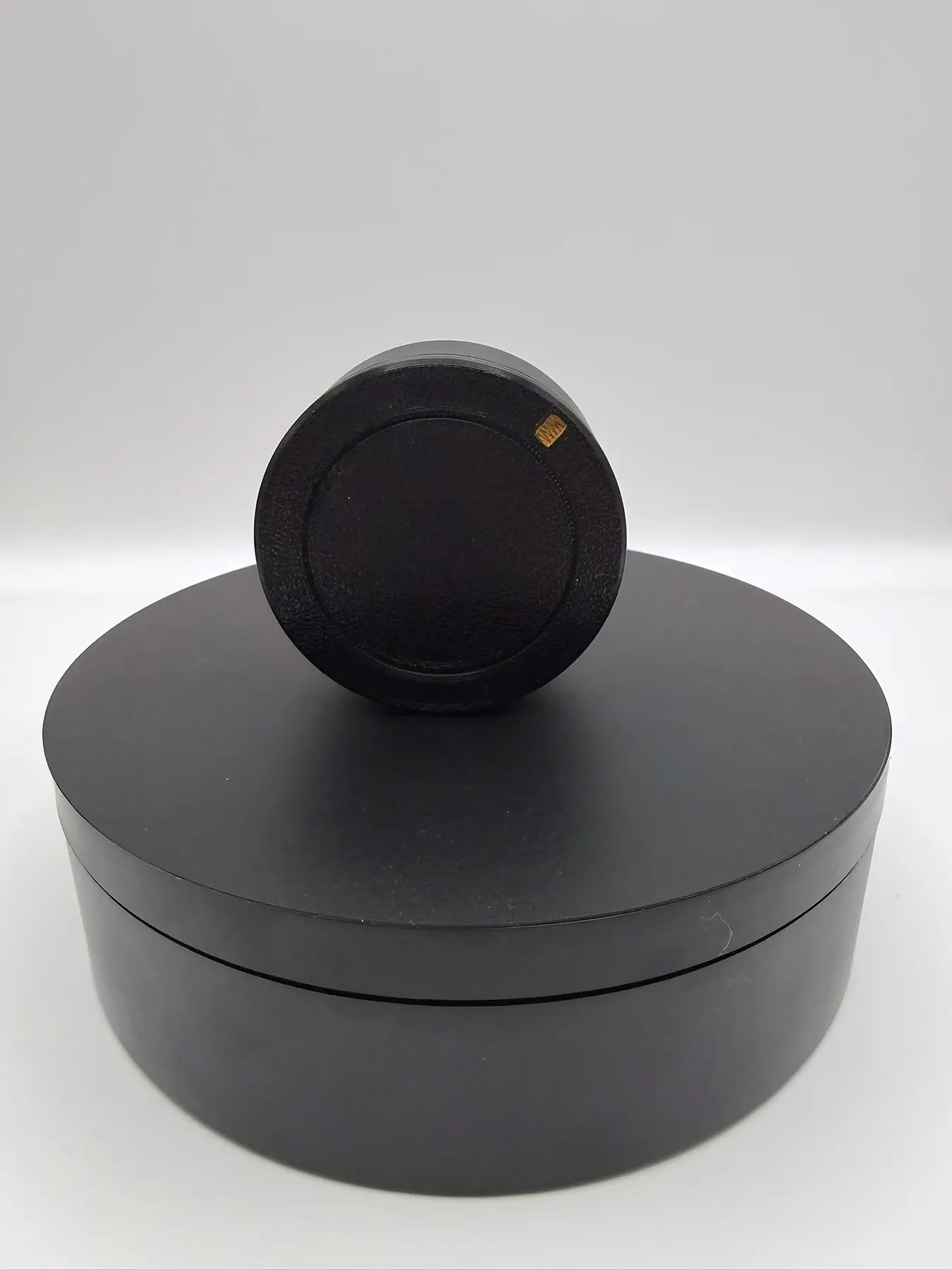
Physical, CAD, and dimensional context.
Scope + honest limitations
Prototype evidence without inflated claims.
- Portfolio prototype, not a genuine or authorized GE component and not sold as an OEM replacement.
- Compatibility was validated only on the purchased timer mechanism used for this project.
- No extended wear, thermal-aging, chemical-resistance, abuse, or appliance certification study was performed.
- No full dryer control-panel or electrical appliance-function test was performed.
Start with the problem
Is a broken or unavailable plastic part keeping useful equipment out of service?
Send clear photos, the mating shaft or interface when available, key dimensions or CAD, expected quantity, environment, and the function the replacement must restore. The solution may be a knob, adapter, cover, bracket, insert, or another custom non-safety-critical part.