
Labeling & Assembly Support
Gateway Poka-Yoke Label Application Fixture
A modular PETG manufacturing aid using a replaceable nest, orientation control, and a dowel-registered label mask to make manual gateway labeling more repeatable and easier to set up.
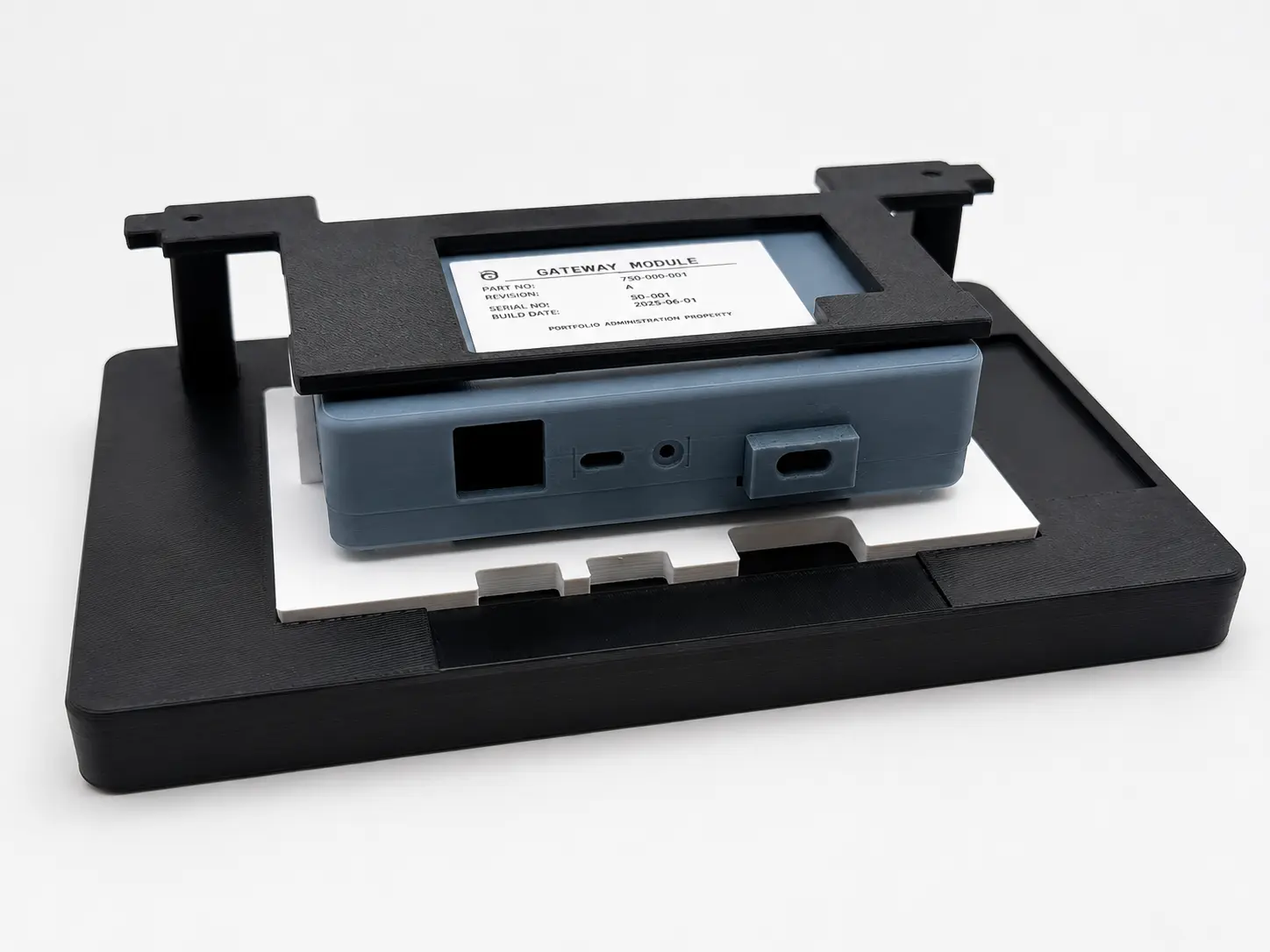
The challenge
Turn an eyeballed labeling task into a controlled physical workflow.
Manual label placement depends on both part orientation and operator judgment. That creates opportunities for rotated parts, inconsistent placement, repeated setup, and rework.
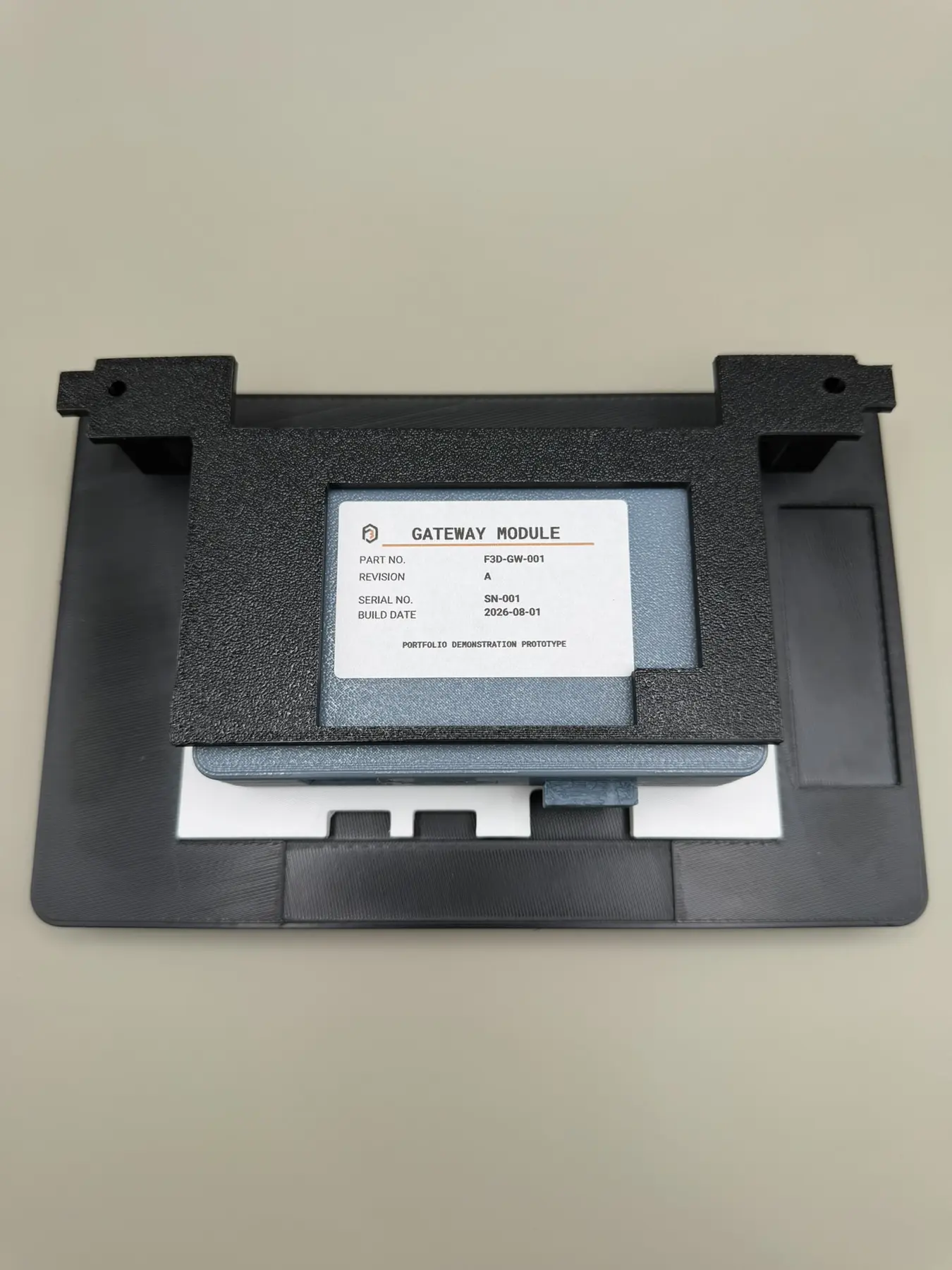
This fixture constrains the reference enclosure, establishes a repeatable label window, and keeps the changeable product geometry isolated in a replaceable nest.
Controlled interfaces
Requirements locked around the real workflow.
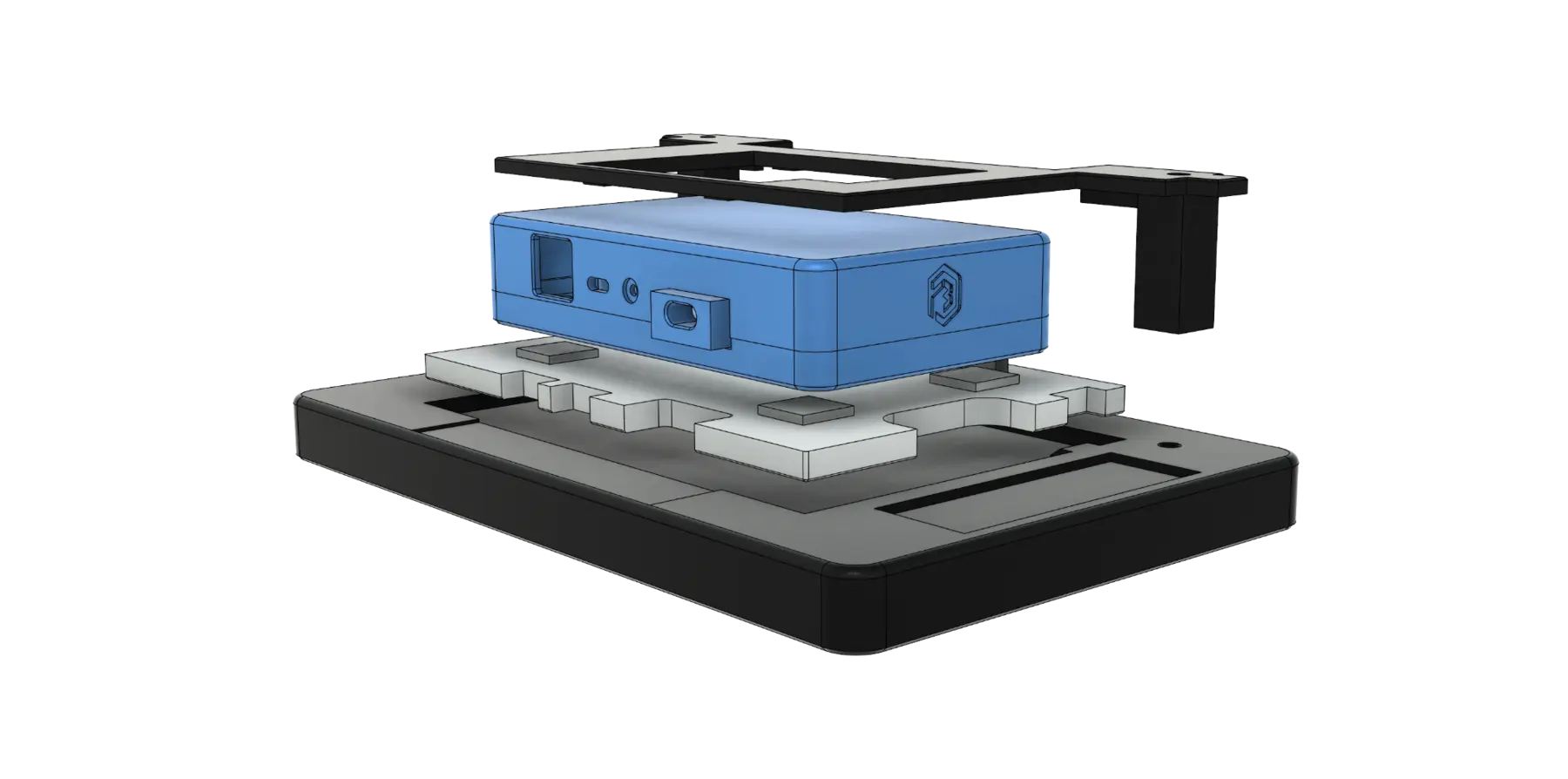
Engineering approach
Build the fixture around datums, modular interfaces, and the operator sequence.
Datum-led loading
Rear and left surfaces establish the locating corner while front and right preserve easier operator access.
Replaceable nest
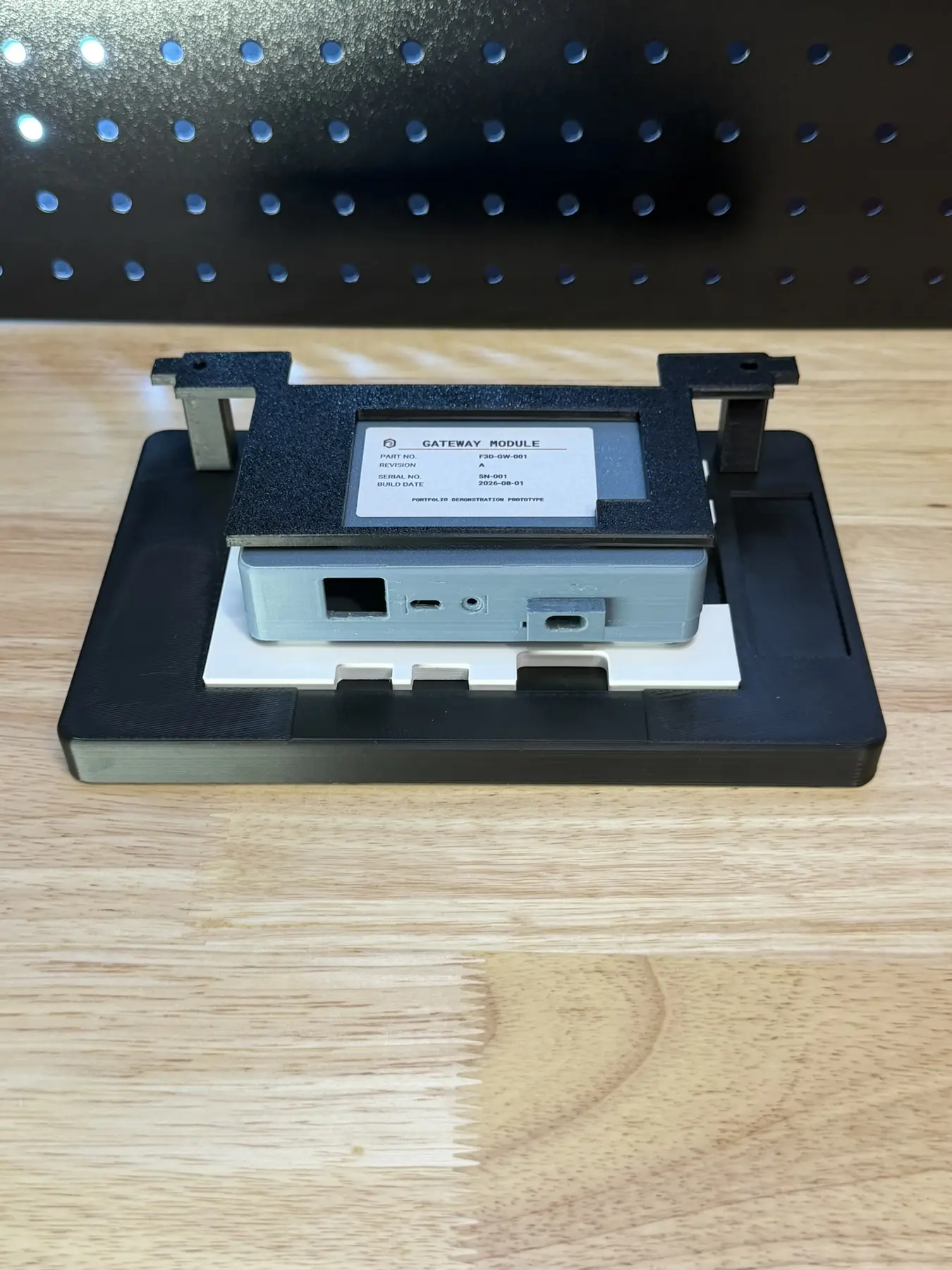
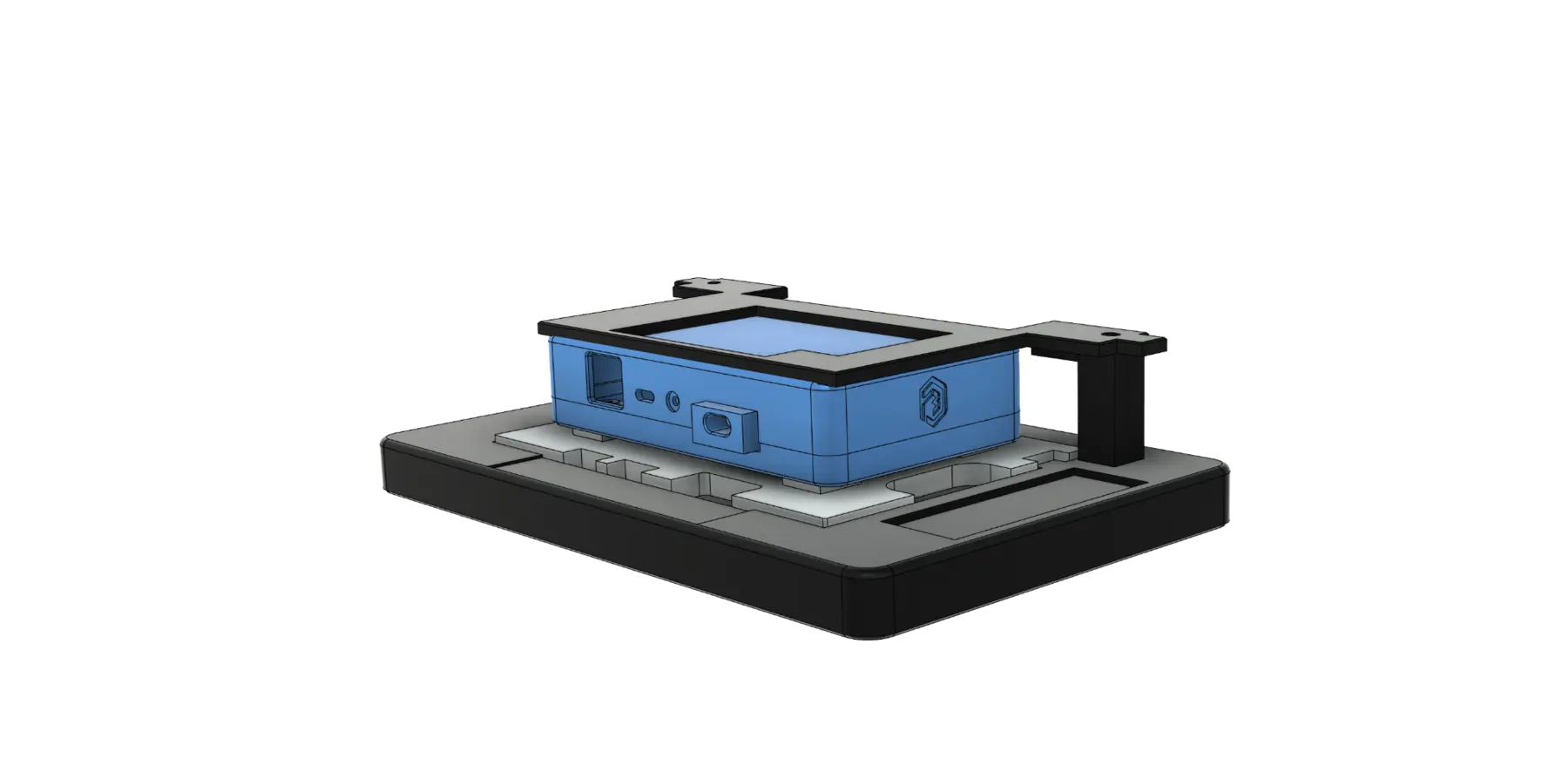
The white product-contact insert is independent of the main base, reducing rework if the product envelope changes.
Registered mask
Two steel dowels locate the removable label mask; one round and one relieved receiver avoid over-constraint.
Service-aware layout
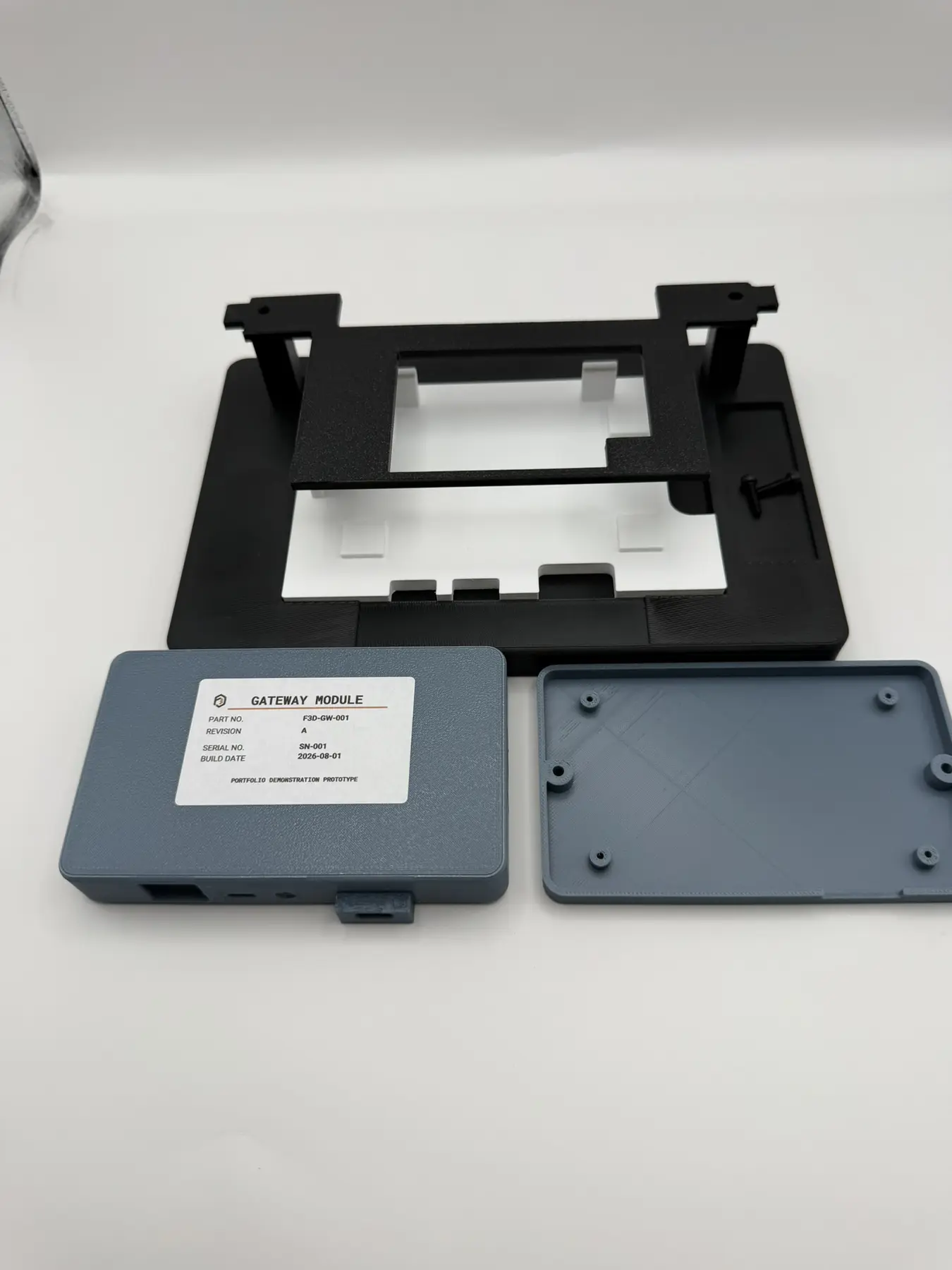
The right-side recess temporarily stages the two enclosure screws while the printed reference gateway is opened.
Iteration + lessons learned
Small coupons qualified the interfaces before the nine-hour base print.
Press-fit, mask-fit, and full-span registration coupons were used to locate the transition between destructive interference and loose retention. The full-span test checked the selected behavior at the real fixture spacing.
Physical testing showed that the first rear bumper condition did not fully block the unintended rear-facing orientation. A local revision increased the bumper geometry until the gateway could no longer sit flat in the wrong direction.
The initial simple product block was sufficient for fixture development. A more realistic two-piece enclosure was added later without forcing a redesign of the stable base, nest, and mask architecture.
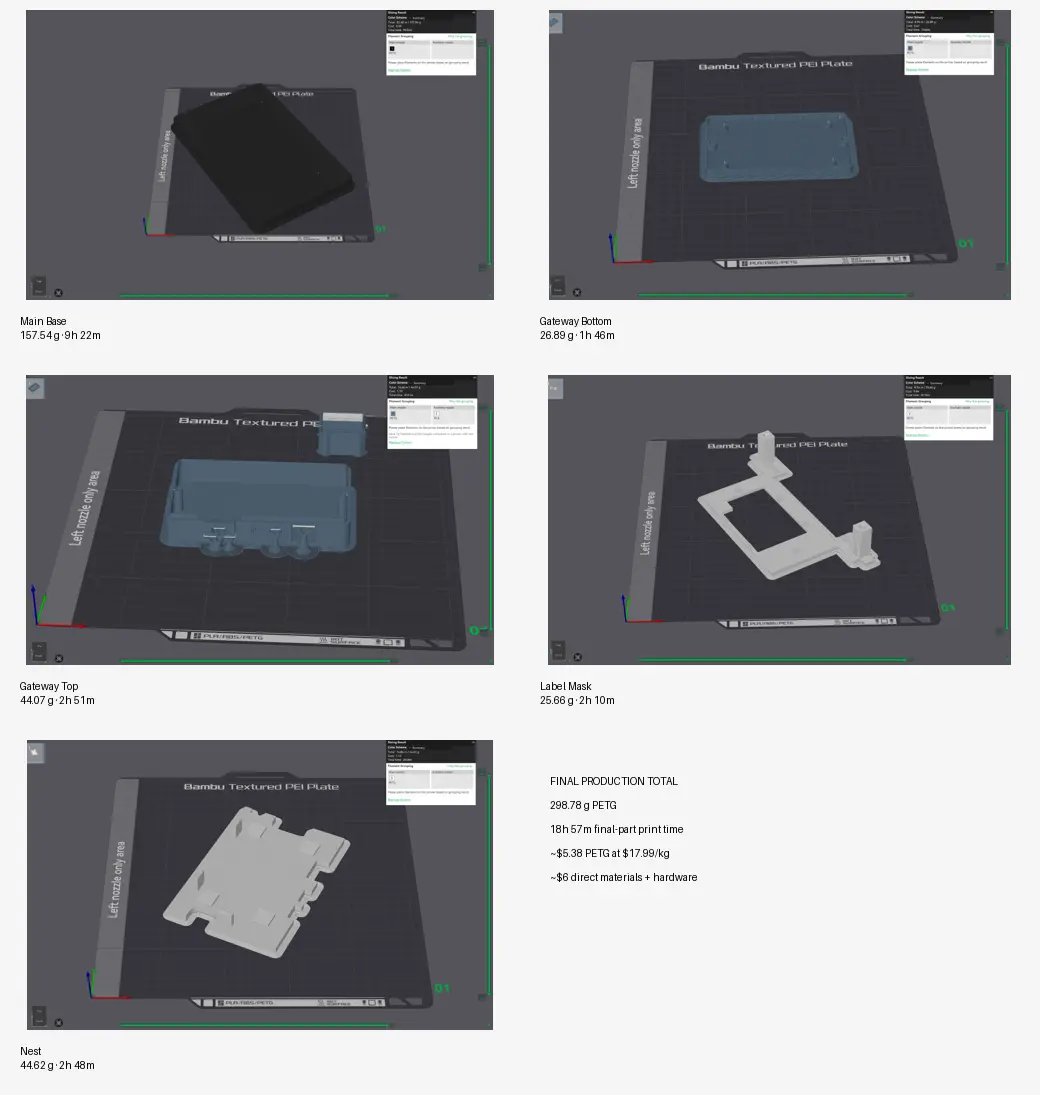
Manufacturing record
Final sliced data—not superseded revisions.
- Printer / plate
- Bambu Lab X2D / Textured PEI
- Final materials
- Black, white, and Misty Blue PETG
- Layer / structure
- 0.16 mm; 3 walls; 20% gyroid
- Support exception
- PLA interface used only for the PETG gateway top
- Final time / mass
- 18h 57m / 298.78 g
- Direct final materials
- Approximately $6 excluding labor and overhead
The published material figure includes the final printed set and allocated hardware/consumables. It excludes design labor, electricity, equipment, failed iterations, and coupon development.
Validation
The physical build passed its intended portfolio checks.
Nest orientation
The replaceable nest installs in the base one way only.
Gateway loading
The enclosure seats in the intended front-facing orientation logic.
Mask registration
The mask registers on both dowels and removes by hand.
Dowel installation
Pins were started by hand and pressed to depth with a C-clamp.
Enclosure closure
Two M3 × 12 mm screws hold the printed enclosure halves.
Bench grip
Four PSA-backed silicone pads provide a non-slip contact layer.
Business value
What this build actually demonstrates.
The result is not only a printed object. It is evidence of a repeatable path from a practical problem through CAD, focused testing, revision, documented manufacturing, and a physically checked release.
- Custom fixture design
- Poka-yoke and orientation control
- Replaceable product nests
- Dowel-registered masks
- Coupon-driven fit qualification
- Custom reference enclosures
- Low-volume PETG manufacturing
- Revision-controlled documentation
Evidence gallery
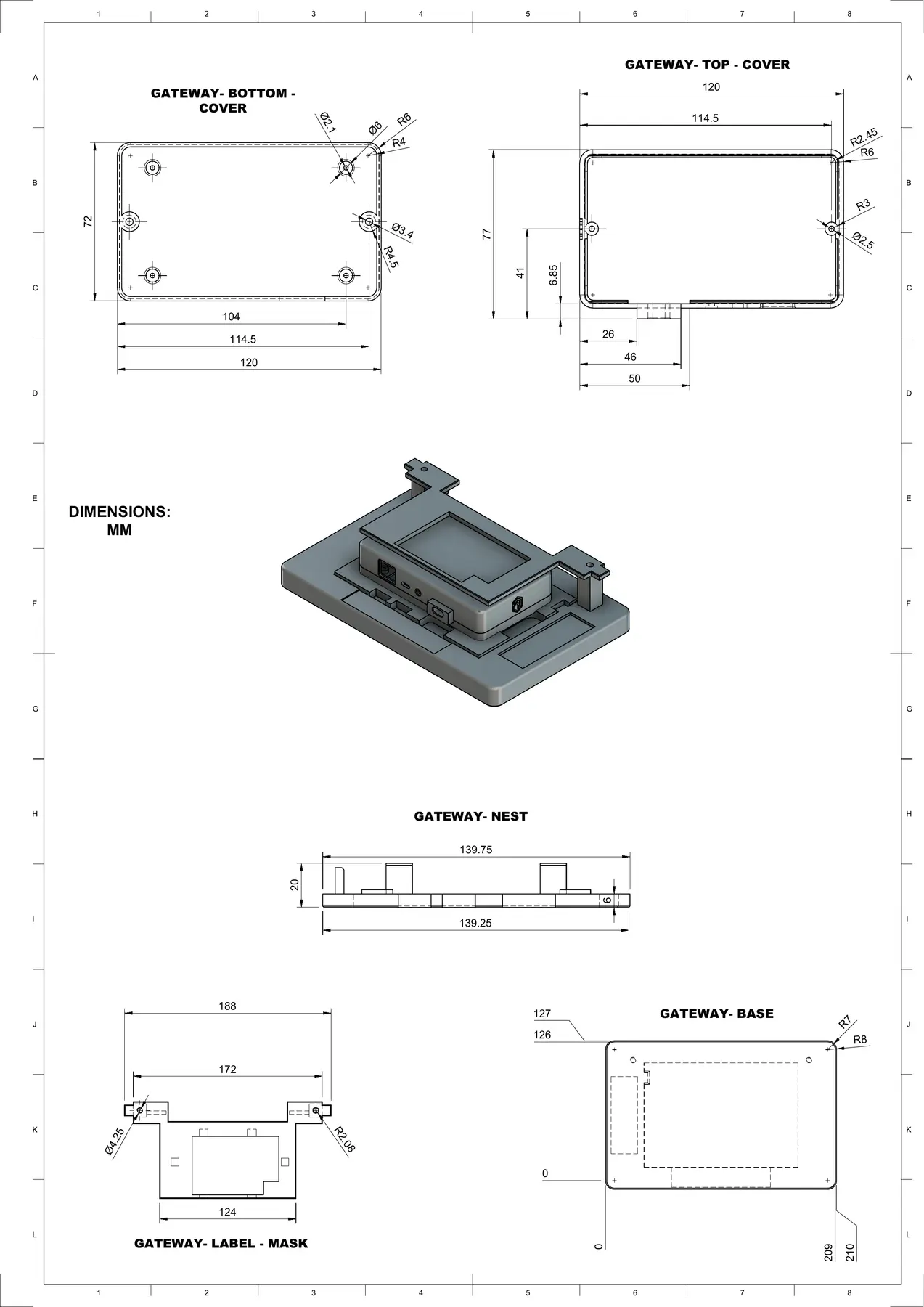
Physical, CAD, and dimensional context.
Scope + honest limitations
Prototype evidence without inflated claims.
- Portfolio demonstration, not a sold production tool or customer production study.
- The gateway is a non-functional reference enclosure with no electronics claim.
- No statistical label-placement study or production cycle-life test was performed.
- No UL, FCC, IP, NEMA, ESD, safety, or environmental certification was performed.
Start with the problem
Does a repetitive bench task still depend on eyeballing it?
Send photos of the current process, the part or CAD, expected quantity, material and environment needs, and the result that needs to become more repeatable. The solution may be a nest, guide, mask, holder, insert, or another custom manufacturing aid.